
Emerging digital trends shaping immersive casino play and UX design
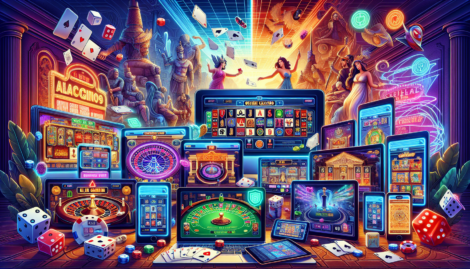
Emerging digital trends shaping immersive casino play and UX design
Online casino entertainment is beginning to feel less like a digital copy of a gambling hall and more like its own form of interactive media. The change is not only about sharper graphics or bigger jackpot banners. It is about pace, personal control, social presence, and the small moments between a player opening a game and deciding whether to stay. I have noticed that even my expectations have shifted. A slow-loading lobby that once seemed normal now feels oddly old-fashioned, while a well-timed recommendation can make an unfamiliar slot feel worth trying.
During a recent stretch of browsing different gambling sites, including beonbet casino australia, I paid more attention to the design choices than I usually do. I noticed the way some platforms put a quick game launch button within thumb reach, while others still make players travel through several screens. That sounds like a very minor detail. Yet, after doing it a few times, I found it had a real effect on whether I felt relaxed or slightly irritated before a game had even started.
Contents
The future of online entertainment, at least from my perspective, will not be built around one dramatic innovation. It will come from several smaller improvements working together. Faster interfaces, more flexible payment options, better live video, smarter recommendations, and clearer tools for managing time or spending all shape the same experience. Some of these trends are exciting. A few make me cautious. Both reactions seem reasonable when casino play becomes increasingly immersive.
From static lobbies to living interfaces
Casino lobbies used to resemble crowded catalogues. There were rows and rows of game tiles, promotional artwork, filters that sometimes worked, and a large banner showing whatever offer happened to be active. That approach is still common, but it is gradually being replaced by something more adaptive. Modern platforms are trying to make the lobby feel alive, not just full.
I first became aware of this after returning to a slot I had played a few days earlier. Instead of having to search through a long provider list, the game appeared near the top with a suggestion for similar titles. It was convenient, though I had mixed feelings about it. Convenience can reduce friction, which is good UX. At the same time, it can make the next click almost too easy. That is why the best interfaces, in my opinion, should pair personal suggestions with visible controls that let players reset, hide, or adjust recommendations.
The end of endless scrolling
Endless scrolling is one of those interface patterns that looks harmless until it becomes tiring. In casino environments, where game collections are large and promotions compete for attention, it can quickly become noisy. I prefer a lobby that gives me a meaningful first screen: recently played games, a small collection of new releases, live casino access, and perhaps one offer relevant to my account. Not twelve flashing panels at once.
Search is also getting more intelligent. Rather than only matching a game title, newer casino search tools can recognise themes, volatility preferences, bonus mechanics, providers, and game types. A player looking for an ancient Egypt slot, for example, may receive something useful even without knowing the exact title. It took me a while to work out why this felt different from a standard filter. The system was anticipating intent rather than simply arranging categories.
Visual calm as a competitive advantage
There is a tendency to assume casino design must always be loud. Bright colours, motion, countdown timers, fireworks and huge prize amounts can certainly catch the eye. But I think visual calm is becoming more valuable, particularly for players using mobile devices in ordinary situations, on a sofa, during a commute, or while waiting for dinner to cook. I remember opening a lobby late one evening and immediately closing it because the moving banners made the page feel busier than my mood could handle.
A calmer layout does not have to be dull. Good spacing, readable type, clear contrast, restrained animation, and a consistent navigation bar can make a casino feel premium without turning every screen into a spectacle. The idea is not to remove excitement from games. It is to let the game create the excitement, rather than the menu around it.
Personalisation without making the player feel watched
Personalisation is becoming one of the biggest forces in gambling UX. Streaming services have trained people to expect tailored homepages, and online casinos are borrowing that expectation. Players are increasingly shown games based on previous activity, preferred stake ranges, favourite genres, time of day, and sometimes device type. A person who mostly plays live blackjack should not have to dig through a page built around slot tournaments. That part is straightforward.
The difficult part is restraint. I appreciate a platform remembering that I like table games, but I do not want every interaction to feel as if a system is trying to predict me. There is a subtle line between helpful and intrusive. The most convincing designs will probably be the ones that explain their recommendations in plain language and provide easy settings. “Shown because you played similar games” is much less unsettling than a mysterious algorithm quietly filling every corner of the screen.
| Trend | What the player notices | UX design challenge |
|---|---|---|
| Adaptive lobbies | Relevant games appear sooner | Avoid narrowing discovery too much |
| Smart recommendations | Suggestions fit individual tastes | Keep logic transparent and optional |
| Gamified journeys | Missions, levels and rewards add structure | Prevent pressure and misleading urgency |
| Cross-device play | Sessions continue across phone and desktop | Maintain security without repeated friction |
Gamification is closely connected to personalisation. Missions, daily challenges, reward tracks, tournaments, collectible items, and progress bars can make a casino visit feel more structured. I can see why this format appeals to people who enjoy video games, because it creates goals beyond a single spin or hand. Still, it is not automatically positive. When every screen pushes the next task, the experience can stop feeling recreational. I prefer optional challenges that sit quietly in the background rather than demanding attention every few minutes.
Live formats are turning casino play into shared entertainment
Live dealer games are perhaps the clearest example of online casinos moving closer to entertainment platforms. A standard digital roulette game is quick and functional, but a live roulette table introduces a host, a studio, ambient sound, real equipment, chat, and a sense that something is happening beyond the player’s screen. Even when I do not use the chat, seeing it move creates a small feeling of presence. It is strange, but it changes the atmosphere.
The next step is already visible in game-show-style products. These games borrow from television, arcade design, and casino mechanics at the same time. They have colourful stages, presenters, multipliers, bonus rounds, audience-style anticipation, and short decision windows. Some players may find them overwhelming. I sometimes do. Yet their popularity says a lot about where online entertainment is heading. People are not always looking for the quiet concentration of a traditional card table. Sometimes they want a spectacle that happens to include wagering.
Chat, community and moderation
Social features can improve the live experience, but they also need careful moderation. A well-managed chat can make a session feel friendlier, especially for people who are playing alone. A poorly managed one can become distracting or unpleasant very quickly. I have seen chats where most messages were harmless greetings and reactions to a big win, and I have seen others where I simply hid the panel after a minute.
The smartest UX choice is usually giving players control. Chat should be easy to open, close, report, mute, or filter. The same principle applies to audio, host commentary, camera angles, and visual effects. Immersion works better when it is adjustable. A player should be able to choose a lively casino-floor feeling or a quieter, more focused session without having to leave the game entirely.
Mobile habits are changing the shape of casino design
For many people, the phone is no longer the secondary casino device. It is the main one. That means UX designers have to think less about shrinking a desktop site and more about designing around real mobile behaviour. I tend to hold my phone with one hand, often with a cup of tea in the other, and I notice immediately when a key button is placed awkwardly at the top edge of the screen. It is a tiny thing, but it matters.
Thumb-friendly controls, readable bet selectors, responsive game panels, biometric login, and clearer session information are becoming basic expectations. A player may only have a few spare minutes, so every extra step becomes more visible. On the other hand, speed should not mean hiding important information. Balance, wagering terms, game rules, withdrawal conditions, and responsible gambling controls should remain easy to find even in a compact layout.
I think the most successful mobile casinos will be designed around brief, interrupted sessions. Someone might open a game, pause because of a call, return later, then switch to a laptop in the evening. Seamless continuation is useful here. Saved favourites, remembered preferences, account alerts, and consistent navigation can make the movement between devices feel natural rather than fragmented.
Payments, verification and trust are part of the entertainment flow
Payments are not usually described as immersive, but they can break immersion faster than almost anything else. I have had a perfectly smooth browsing experience interrupted by a deposit page that looked unrelated to the rest of the site, asked for unclear details, and gave no sense of what would happen next. Suddenly the platform felt less polished. Trust, in online gambling, often comes from these mundane moments.
Digital wallets, instant bank transfers, open banking tools, and biometric confirmation are reducing friction in many markets. The appeal is obvious. Players want deposits and withdrawals to feel secure and understandable, not like a separate technical procedure. Faster withdrawals are especially important because they influence how credible a platform feels. Even before money arrives, a clear status update can reduce uncertainty.
Verification is another delicate area. Identity checks are necessary, but the design can either reassure a player or make the process frustrating. I prefer a step-by-step approach that explains why each document is needed and shows progress clearly. A vague request for more information, with no estimated review time, tends to create the opposite feeling. In the future, better digital identity systems may shorten this process, though privacy will need to remain part of the conversation.
Technology on the horizon, from AI to extended reality
Artificial intelligence will likely shape online casino experiences in ways that are visible and invisible. On the visible side, it can improve customer support, search, language translation, game discovery, and personal recommendations. On the less visible side, it can help detect suspicious behaviour, identify technical issues, and improve fraud prevention. I am cautiously optimistic about that. Nobody wants to spend twenty minutes trying to explain a simple account problem to a support form that does not understand the question.
AI support, however, needs an easy path to a real person. There are situations where a quick automated answer is enough, such as locating a payment history or explaining how a bonus tracker works. There are other situations, particularly involving withdrawals, account restrictions, or safer gambling tools, where a human conversation is more appropriate. The best automation does not pretend every problem is simple.
Virtual spaces may arrive slowly
Virtual reality and augmented reality are frequently mentioned whenever immersive entertainment comes up. I can imagine virtual casino spaces where players walk through a stylised lounge, approach tables, interact with hosts, and watch tournaments from a shared digital room. But I do not think a headset alone will make the experience better. If putting on equipment takes longer than opening a live table on a phone, many people will choose the phone.
The more realistic near-term development may be lighter forms of immersion. Think optional 360-degree live streams, spatial audio, augmented game information, avatar-based tables, or interactive spectator areas. These ideas can add atmosphere without requiring players to completely change their habits. That is often how digital trends actually succeed, through gradual adoption rather than a sudden leap.
Responsible UX will become a defining design standard
The more seamless casino entertainment becomes, the more important it is to design meaningful pauses and controls into the experience. This is not a side feature. It should be part of the core product. Deposit limits, time reminders, reality checks, cooling-off tools, self-exclusion routes, transaction history, and clear access to support need to be visible when players need them, not buried in a footer.
I have come to appreciate simple session reminders more than I expected. Once, while testing a few games for what I thought would be ten minutes, I looked up and realised nearly an hour had passed. Nothing dramatic happened, and I was not chasing anything. I had simply lost track of time because the experience was smooth. That small moment made the value of a neutral time notification very clear to me.
For me, a good gambling platform should make these actions straightforward:
- Set a deposit, loss, or session limit without having to contact support.
- See current balances, betting history, and promotional progress in plain language.
- Pause or close an account through a clear process that does not create unnecessary obstacles.
- Find independent help resources without being redirected through several account pages.
There is a slight contradiction here. Casinos are trying to make entertainment more engaging, more personalised, and easier to access, while responsible design sometimes asks them to slow the player down. I do not see that as a weakness. It is probably the central UX challenge for the next generation of platforms. A product can be smooth without being pushy. At least, it should try to be.
Conclusion
Online casino entertainment is heading toward experiences that feel more personal, social, flexible, and visually polished than the basic digital lobbies of a few years ago. Live hosts, adaptive game discovery, mobile-first navigation, faster payments, AI support, and emerging virtual formats are all moving in the same direction. From what I have seen, the strongest UX design will not be the one that adds the most effects or encourages the most clicks. It will be the one that understands the player’s time, gives clear choices, keeps trust visible, and still leaves room for a little excitement. That balance may be difficult, perhaps even imperfect, but it is where immersive casino play becomes genuinely better rather than simply more intense.
Call Us
916-719-4635
Email
Merv@PeopleFirstProjectManagement.com